
Washer Not Draining — Standing Water in the Drum After a Cycle
A washing machine that won’t drain leaves clothes sitting in water and blocks the door on front-loaders. It is the most common washer repair call in California — and in most cases, it can be diagnosed and resolved in a single visit. Here is what is actually causing your washer not draining and what to do next.
If your washer stopped with water inside:
- 1Do not run another cycle — it adds more water
- 2On front-loaders: check for an emergency drain hose behind the filter access panel
- 3Note the error code on the display (LG OE, Samsung 5E, Whirlpool F21)
- 4Call WasherDoctor — most drain failures are resolved the same day
What It Means When Your Washer Won’t Drain
Every washing machine uses a drain pump to push water out of the drum and through the drain hose at the end of a cycle. When the pump cannot move water — because it is blocked, clogged, or has failed — the machine detects the problem and stops the cycle rather than continuing to a spin. The result is standing water in the drum, wet clothes that cannot be spun out, and in most cases, an error code on the display panel.
A washer not draining looks the same whether the cause is simple (a blocked filter cleared in 20 minutes) or more involved (a failed pump motor requiring replacement). This is why diagnosis matters: the right repair depends entirely on where in the drain system the failure occurred. A technician who replaces the pump motor without first clearing the filter — or checking the harness wiring — has wasted your money and time.
What the Error Codes Mean
Drain failures produce brand-specific error codes that confirm the machine detected a drainage problem but do not tell you which component failed:
| Brand | Error Code | What It Means |
|---|---|---|
| LG | OE | Drain system not clearing — filter, hose, or pump |
| Samsung | 5E / SE | Drain error — same three-point diagnosis required |
| Whirlpool / Maytag | F21 | Long drain — pump not clearing water within the expected time |
| GE | E3 | Drain fault — pump system issue |
| Bosch | E18 / F18 | Drainage failure — filter or pump |
None of these codes identify which component failed — they only confirm water is not draining. The diagnosis step determines that.
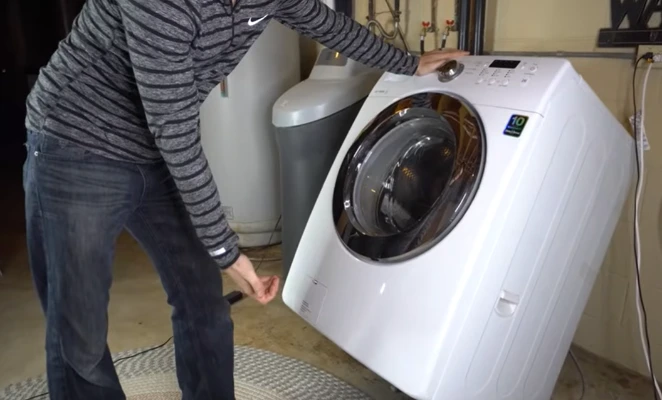
Why Your Washer Won’t Drain — The Four Causes, in Order of Likelihood
Drain failure has four possible causes. They are not equally common. A technician works through them in likelihood order — cheapest and most probable first, not most expensive first.
Clogged Drain Pump Filter
The most frequent cause of a washer not draining — and the one that costs the least to fix. All front-load washers have a pump filter that catches lint, coins, hairpins, and debris before they reach the pump motor. When it becomes clogged, water cannot pass through and the pump cannot drain. In California’s hard-water cities above 300 ppm (Ventura, Glendale, Santa Clarita), mineral scale compounds the blockage and can pack the filter solid within months on machines that are never cleaned.
Top-load washers handle debris differently — most do not have a user-accessible filter in the same location — but blockages can still occur in the pump housing.
Blocked or Kinked Drain Hose
The drain hose carries water from the pump to the standpipe or utility sink. A kink anywhere in the hose — often caused when the machine is pushed back against a wall — creates enough restriction to prevent drainage completely. A hose pushed too far into the standpipe (more than 8 inches) creates a siphon that pulls water back into the drum instead of letting it drain. A clog of debris inside the hose at the standpipe connection is also common.
This is worth checking before calling anyone — no tools required.
Failed Drain Pump Motor
When the filter is clear and the hose is unobstructed, the drain pump motor itself may have failed. The motor drives the impeller that moves water through the system. Pump motors burn out from years of use, from debris getting past the filter and jamming the impeller, or from running dry when a clog caused overheating. A failed pump produces no movement at all — you may hear the motor trying to run but nothing draining.
This is the most common repair-requiring cause. Parts are widely available for LG, Samsung, Whirlpool, Maytag, and GE — and most can be completed same-visit.
Wiring or Harness Failure
This is the cause most people — and many technicians — miss. On Whirlpool and Maytag top-load washers specifically, a broken wire in the pump harness connector can prevent the pump from receiving power even when the pump motor itself is functional. Multiple technicians report seeing this 3–5 times per month on Whirlpool WTW models — yet many homeowners who already replaced their pump motor come away still unable to drain.
The specific failure point: the black wire with white trace at the pump harness connector, where it passes a pinch point near the capacitor. Visual inspection of the pump alone will not find this.
Lid Switch or Door Lock Signal Failure
Some washers will not advance to the drain cycle if the lid switch (top-loaders) or door lock assembly (front-loaders) fails to send the correct signal. The machine may fill and begin agitating, then halt before draining when it checks the lid/door status. The symptom looks like a drain failure but is actually a safety circuit interruption — and the fix is completely different from any pump-related repair.
This cause is important to distinguish early because it changes the entire diagnostic and repair path.
Control Board Failure
The control board sends the command to activate the drain pump. Rarely, a board failure results in the drain cycle never being triggered — the machine simply stops without draining. This presents identically to a pump failure and can only be distinguished by testing the pump motor directly (bypass the board) or by diagnosis via fault code analysis.
Control board replacement is the most expensive drain-failure repair at $200–$500+ and should only be reached after all other causes are ruled out. A technician who quotes a control board for a drain failure without first checking the filter, hose, pump, and harness is skipping steps.
Why is my washer not draining but the pump sounds like it’s running?
If you can hear the pump motor running during the drain cycle but water is not moving, the most likely cause is a blockage — not a pump motor failure. The motor is working; it is pushing against an obstruction it cannot overcome. Check the drain pump filter first (on front-loaders, behind the small access panel at the bottom front of the machine). A clogged filter can stop all drainage even when the pump motor is completely functional. If the filter is clear and the hose is unobstructed, the impeller inside the pump housing may be jammed with debris — which requires disassembly to address.
What You Can Check Before Calling Anyone
Two checks take under 10 minutes and cost nothing. If either resolves the problem, you may not need a technician at all. If they do not, you will give a technician useful information that speeds up diagnosis.
If you already replaced the drain pump and your washer is still not draining: This is more common than it should be. Before assuming the new pump is also faulty, check the pump harness wiring connector — specifically the black wire with white trace at the connection point near the capacitor on Whirlpool and Maytag models. A broken wire here prevents power from reaching a functioning pump and mimics pump failure exactly.
Why Drain Failures Happen Faster in California’s Hard-Water Cities
The drain pump filter — the single most common cause of washer drainage failure — clogs significantly faster in California cities with hard water above 200 ppm. If you live in one of these cities, the national advice of “clean the filter once a year” is not sufficient.
Ventura — 479 ppm
Among California’s highest municipal water hardness levels. Mineral scale builds inside the pump filter housing within weeks of cleaning in Ventura. Monthly filter cleaning and periodic housing descaling prevents the most common drain failure cause.
Santa Clarita — 420 ppm
Hard water deposits calcify inside the pump filter and begin restricting flow faster than most manufacturers expect. Santa Clarita homeowners should clean the pump filter every 4–6 weeks.
Glendale — 360 ppm
Mineral buildup in pump housings and on pump impeller blades reduces flow efficiency over time, eventually triggering OE or 5E codes even without a full blockage. The pump works harder before it fails completely.
Burbank, Pasadena, Simi Valley
All above 275 ppm — all faster than average filter clogging rates. Inlet valve screens and pump filter both need more frequent attention in these markets than in coastal soft-water cities like San Diego or Monterey.
For a city-by-city breakdown of California water hardness and its effects on washing machine components: California hard water and washing machines guide.
When to Call a Technician — and What to Tell Them
Call a technician when:
-
→
The filter is clear, hose is unobstructed — still not draining
At this point the fault is inside the pump system, harness wiring, or control board — none of which can be confirmed without testing.
-
→
You replaced the pump motor and it still won’t drain
Stop. Do not order a second pump. The harness wiring is likely the issue — a technician can confirm this in minutes with a multimeter.
-
→
There is no emergency drain hose and the drum is full
Attempting to manually remove water without the proper access point risks flooding the laundry room. A technician can drain the drum safely before diagnosing.
-
→
The error code reappears after reset
A drain code that returns after unplugging and restarting confirms a mechanical or electrical fault, not a temporary software state. Reset is not a fix.
-
→
You cannot access the filter safely
Some stackable units and built-in models have the filter in a difficult or inaccessible position. Attempting access without the right approach risks water damage or component damage.
Tell the technician:
Your washer brand and model
Model number is on the door frame label or back panel. Even approximate is helpful — “LG front-loader, about 6 years old.”
The exact error code
OE vs. LE on an LG changes the entire diagnostic approach. Take a photo of the display before the machine powers off.
What you have already tried
Cleaned the filter? Checked the hose? Already replaced the pump? This information saves significant diagnostic time and cost.
Whether the problem is new or gradual
A drain failure that appeared suddenly differs from one that started as “slower than usual” over weeks — the second suggests accumulating blockage, the first suggests a sudden component failure.
Your city in California
Water hardness matters. A Ventura technician and a San Diego technician are looking for the same failure pattern but with different probability weightings based on local water chemistry.
Washer Still Full of Water? WasherDoctor Can Be There Today.
Most drain failures are resolved in a single visit — filter clearance, pump replacement, or harness repair. The $89 diagnostic fee comes off your repair bill if you proceed. Same-day scheduling available across California.
What Drain Repair Costs in California
California drain pump repairs run higher than national averages — labor costs $100–$175/hour statewide, and parts sourcing in California adds a modest premium over Midwest pricing. Here is what to expect by repair type:
| Repair Type | California Range |
|---|---|
| Diagnostic fee (credited to repair) | $89 |
| Drain pump filter clearance — no part | $89 (diagnostic only) |
| Drain hose replacement or repositioning | $100–$160 |
| Drain pump motor replacement | $150–$320 |
| Pump harness wiring repair | $110–$190 |
| Lid switch replacement (top-load) | $120–$200 |
| Control board — if confirmed cause | $200–$500+ |
A drain failure that resolves with filter clearance costs $89. One that requires pump motor replacement costs $150–$320. These are meaningfully different — which is exactly why diagnosis before quoting matters.
Is drain repair worth it? On a machine under 10 years old, almost always yes — even a $320 pump replacement is well under 50% of the $700–$1,100 cost of a replacement washer. Full framework: washer repair or replace guide.
California Washer Repair Cost Guide →Washer Not Draining — Real California Repair Cases
Three different drain failure causes, three different repairs, three different costs. All from California homes.
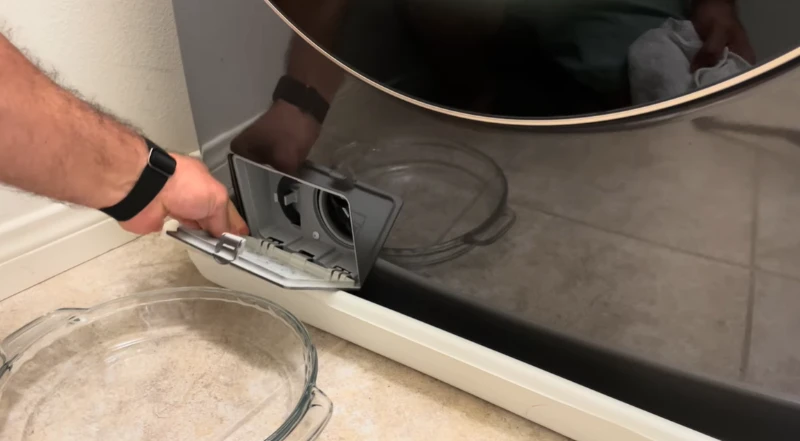
OE Error, Full Drum — $89 Filter Clearance, No Parts Needed
Situation: Monday morning — drum full of standing water, LG OE code, wet clothes inside. Called at 9am, technician arrived by noon.
Diagnosis: Drain pump filter compacted solid with calcium and magnesium mineral scale. Ventura’s 479 ppm water hardness had been building in the filter for months. The pump motor was functional; water simply could not pass through the blocked filter.
Repair: Filter removed, cleared of solid mineral scale, housing rinsed and descaled. Full drain cycle run successfully before departure. Homeowner shown the filter location and advised on monthly cleaning to prevent recurrence.
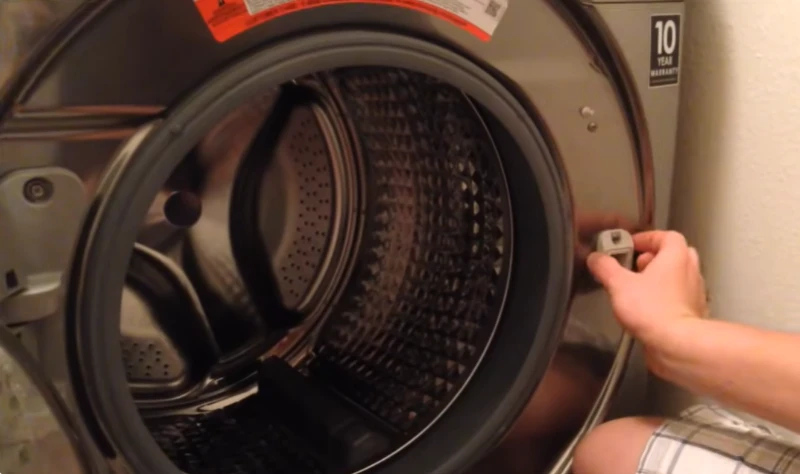
5E Error, Filter Clear — Failed Pump Motor Confirmed and Replaced
Situation: Samsung top-load showing 5E error for three days. Customer had already cleaned the filter and checked the hose — both clear. Drum remained full after every attempted cycle.
Diagnosis: With filter and hose ruled out, technician tested pump motor directly. Motor showed no resistance — confirmed electrical failure. The impeller had seized from debris that passed the filter during a previous cycle, burning out the motor winding.
Repair: OEM Samsung drain pump assembly replaced. Machine tested through two complete drain cycles before departure.
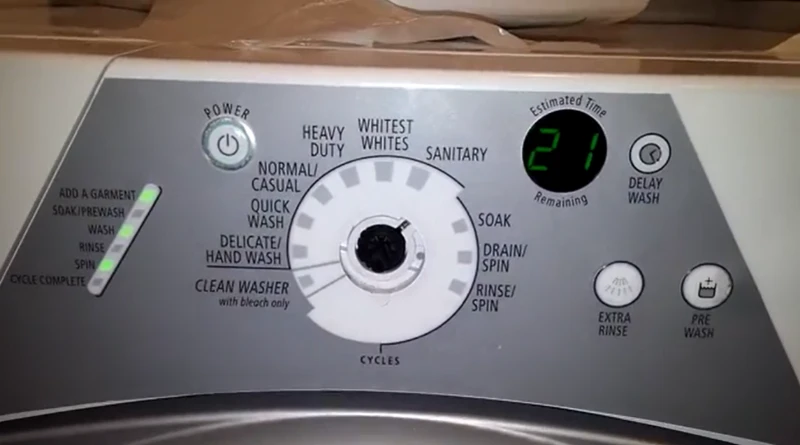
Replaced the Pump — Still Won’t Drain. The Real Problem Was a Broken Wire.
Situation: Customer had replaced the drain pump motor themselves after a YouTube diagnosis. Machine still showed F21 drain error. Customer was ready to buy a new washer out of frustration.
Diagnosis: Technician tested the new pump directly — it was functional. Traced the electrical path to the pump harness connector and found the black wire with white trace broken at the pinch point near the capacitor. This documented failure point on Whirlpool WTW models is frequently missed because it does not appear on visual inspection of the pump.
Repair: Harness connector repaired. Machine draining perfectly on first test cycle. Customer’s DIY pump replacement was unnecessary — but the new pump was also left in place.
Problems Often Confused With a Drain Failure
Sometimes what looks like a drain problem is actually a different failure. If your machine does drain but you are still having issues, these may be the actual cause.
Washer Stops Mid-Cycle
If the machine halts partway through and never reaches the drain step, the issue may be a door lock, lid switch, or control board fault — not a drain failure at all.
washer stops mid-cycleClothes Coming Out Soaked
If the drum drains normally but clothes are still dripping wet, the spin cycle is the failure — not the drain. These are separate systems requiring separate diagnosis.
washer not spinningWater Leaking Onto the Floor
A machine that appears to drain but leaves water on the floor is leaking — from the door seal, pump housing, or hose connections — rather than failing to drain internally.
washer leaking waterWasher Won’t Start
If the machine will not start at all — no cycle begins, no filling occurs — the cause is upstream of the drain system entirely: lid switch, door lock, or control board.
washer won’t startWasher Not Filling
If the drum is empty and water never enters — different problem entirely. Inlet valve screen blockage or valve failure, common in California’s hard-water cities.
washer not filling with waterSame-Day Emergency Service
If the drum is full now and you need it resolved today — call directly. Most drain failures are completed in a single visit, including Saturday calls at no extra charge.
same-day washer repairWasher Not Draining — Questions & Answers
Direct answers to what people actually ask before calling about a drain failure.
In most cases, yes — especially if the machine is under 10 years old. The most common drain failure cause is a clogged filter, which costs $89 to diagnose and often nothing more. Even a failed pump motor at $150–$320 is well under the 50% threshold relative to a replacement washer costing $700–$1,100. The situation where repair may not make sense: control board failure on a machine over 10 years old approaching $400–$500 in repair cost. A technician can give you an honest assessment after diagnosis.
No — do not run another cycle. Starting a new cycle on a machine that already has standing water adds more water it cannot remove, increasing the risk of the drum overfilling and potentially overflowing. It also puts stress on a pump system that is either blocked or failed. If you need to get clothes out of a front-loader with a locked door, use the emergency drain hose behind the filter access panel to remove the standing water first, which will release the door lock.
For front-loaders: locate the small access panel at the bottom front of the machine. Behind it you will find a thin emergency drain hose with a cap. Pull the hose out, remove the cap, and let the water drain into a shallow pan or towels. This will drain the drum and release the door lock. For top-loaders without a filter access panel: use a wet-dry vacuum placed next to the drum opening, or use a towel to scoop water out manually. Do not tip the machine — this can damage components and create an injury risk.
It depends on the cause. Filter clearance: 20–30 minutes on-site. Hose repositioning: 15–20 minutes. Pump motor replacement (if part is on the truck): 45–75 minutes. Control board or parts that must be ordered: first visit for diagnosis and part order, second visit (typically 2–5 days later) for installation. Most technicians stock drain pumps for LG, Samsung, Whirlpool, and Maytag — making same-visit repair the realistic outcome for the most common cause.
A slow drain — where the machine drains but takes much longer than normal — almost always indicates a partial blockage rather than a complete failure. The pump is still working but is fighting restricted flow through a partially clogged filter or a pump housing that has accumulated mineral scale on the impeller blades. A slow drain that is ignored typically progresses to a complete drain failure within weeks to months. Clean the filter first; if that does not resolve it, the pump housing or impeller needs inspection.
Yes, and this is more common than most guides acknowledge. The drain hose can be blocked in three ways: a physical kink caused by the machine being pushed against a wall, a debris clog at the standpipe end where lint and residue accumulate over time, or incorrect insertion depth causing siphoning. All three produce the same symptom as a failed pump — OE or 5E error code and standing water — and all three can be checked without tools in a few minutes.
With the filter clear, check the drain hose for kinks and confirm it is not inserted more than 8 inches into the standpipe. If both checks pass, run a drain-only cycle and listen: if you can hear the pump running but water is not moving, the pump impeller may be jammed with debris that passed the filter. If the pump is completely silent, the motor has failed or is not receiving power. Either scenario needs a technician — the repair path differs significantly between a jammed impeller and a failed motor.
Washer Not Draining? WasherDoctor Diagnoses the Real Cause First.
Same-day drain repair service across California. Written estimate before any work begins. Most drain failures resolved in a single visit. $89 diagnostic fee credited to your repair.